

3 day Marrakech Tour
3 day Marrakech tour
A 3 day Marrakech tour is the perfect way to escape the busy streets of the Red City and discover the silence, colors, and magic of southern Morocco. In just a few days, you travel from vibrant souks to snow-capped mountains, ancient kasbahs, lush palm groves, and finally the golden dunes of the Sahara. This itinerary balances driving and discovery so you can see a lot without feeling rushed. Below is a complete guide to what to expect, day by day, plus practical tips to make the most of your adventure.
Why Choose a 3-Day Marrakech Desert Tour?
For many travelers, time in Morocco is limited, and it’s not always possible to spend a week exploring. A 3-day Marrakech desert tour offers an ideal compromise. It gives you enough time to leave the city, cross the High Atlas mountains, visit iconic sites such as Aït Benhaddou, and spend a night under the stars in a traditional desert camp.
Unlike a quick overnight tour, a 3-day route allows a slower pace and a richer experience. You’ll have time to stop for photos, enjoy local meals, talk with your driver or guide, and truly feel the change of landscapes. From red rock canyons to green oases and wide-open desert, the variety is one of the tour’s biggest charms.
Day 1: Marrakech – High Atlas – Aït Benhaddou – Dades Valley
Your journey usually begins early in the morning from your riad or hotel in Marrakech. As you leave the city, the scenery quickly changes. The flat surroundings of Marrakech give way to rolling hills and then to the proud silhouettes of the High Atlas mountains. The road begins to climb, and you’ll soon find yourself on one of Morocco’s most famous mountain passes.
Crossing the High Atlas Mountains
The Tizi n’Tichka pass, at over 2,200 meters, offers spectacular views. On clear days, you can see peaks covered with snow in winter and spring, while the lower slopes are dotted with small villages and terraced fields. The road is winding but well-paved, and you’ll stop at viewpoints to take photos and stretch your legs.
These stops are also an opportunity to see rural life: shepherds guiding their flocks, small roadside stalls selling fossils, minerals, and handmade crafts. The air is fresher here than in Marrakech, and you’ll immediately realize how different the mountain atmosphere feels.
Aït Benhaddou: The Iconic Ksar
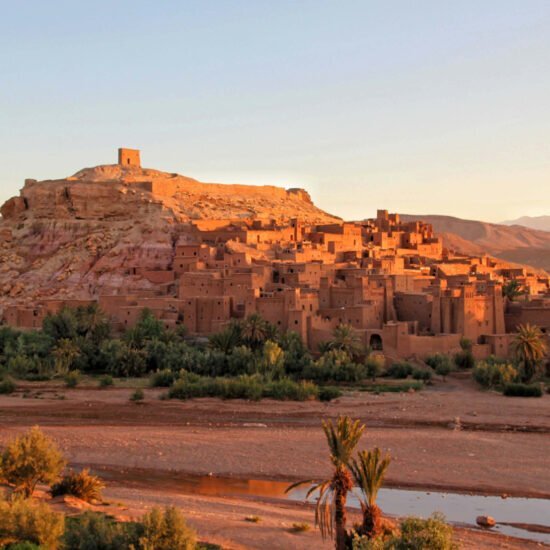
After crossing the pass, you descend toward the Ounila valley and reach Aït Benhaddou, one of Morocco’s UNESCO World Heritage sites. This fortified village, built in earth and stone, has appeared in countless films and series. Its stacked houses, towers, and walls blend seamlessly into the hillside, creating a timeless picture.
You’ll cross a shallow river—usually via a new bridge, sometimes via stepping stones—and climb through narrow alleys to the top of the ksar. From there, the view over the valley and surrounding desert plateau is breathtaking. As you explore, your guide may explain how traditional constructions are made with mud, straw, and wood, and how families used to live inside this fortified complex.
After lunch, often in a restaurant overlooking Aït Benhaddou, the road continues toward Skoura and then into the Dades Valley.
The Dades Valley: Canyons and Kasbahs
The Dades Valley, sometimes called the Valley of a Thousand Kasbahs, is full of old fortified houses and villages tucked between fields of wheat, almond trees, and roses. You drive along a river that has carved dramatic rock formations and gorges. Many tours include a detour into the Dades Gorges themselves, where steep cliffs rise on both sides of the road.
By late afternoon or early evening, you arrive at your hotel or guesthouse in the Dades area. These accommodations often sit on a hillside or along the river, with terraces that offer a peaceful view over the valley. Dinner is usually a traditional tagine or couscous, served with mint tea. After the long but rewarding first day, the silence of the valley and the clear night sky make for a restful sleep.
Day 2: Dades Valley – Todra Gorges – Merzouga – Sahara Desert Camp
The second day takes you from rocky valleys to the edge of the Sahara. After breakfast, you continue east toward another famous natural landmark: the Todra Gorges.
Todra Gorges: Vertical Cliffs and Palm Groves
The road winds through small villages until it reaches the entrance of the gorge. Here, tall limestone walls rise up to 300 meters, and a small river runs at their base. The road passes between the cliffs, and this narrow section is where most visitors stop to walk, take photos, and enjoy the cool air.
Local climbers often test their skills on the rock faces, and you may see families picnicking by the water. The contrast between the bright sky above and the shaded gorge below creates a dramatic atmosphere. After some free time in Todra, you return to the open road, heading south and east toward the desert.
Arriving in Merzouga and the Erg Chebbi Dunes
As you approach the town of Merzouga, the scenery gradually becomes more arid and flat. Then, suddenly, the Erg Chebbi dunes rise from the horizon: tall, golden sand hills that shift with the wind and light. This is often the most anticipated moment of the tour.
Depending on your package, you might arrive at a small hotel near the dunes in the afternoon, where you can leave your main luggage. From there, a camel caravan typically waits to carry you into the desert camp. Mounting a camel and moving slowly across the dunes at sunset is one of the classic Sahara experiences. The changing colors—gold, orange, and soft pink—make this ride unforgettable.
Night in the Desert Camp
Your desert camp is usually equipped with traditional Berber-style tents, comfortable bedding, and shared or private facilities depending on the level of comfort you’ve booked. Once you arrive, you’ll have time to walk on the dunes, sit quietly, and watch the sun disappear behind the sand hills.
Dinner is served in a communal tent or under the stars: soup, tagine, fresh bread, and fruit are common. After the meal, local hosts often bring out drums and traditional instruments. Around a campfire, you can listen to stories, songs, and music from the Sahara region. If the sky is clear, you’ll see an impressive number of stars; the lack of light pollution makes constellations sharp and bright.
Many travelers choose to climb a nearby dune in the dark, simply to lie on the sand and enjoy the silence. The combination of cool night air, endless sky, and the feeling of remoteness is one of the highlights of the 3-day Marrakech desert tour.
Day 3: Sahara Desert – Ouarzazate – Marrakech
The last day begins early, often before sunrise, to give you one more special moment in the dunes.
Sunrise Over the Dunes
You may wake up to a gentle knock on your tent or the distant sound of drums. A short walk or camel ride takes you to a good viewpoint for sunrise. As the first light appears, the dunes slowly change color, and the shadows draw sharp lines across the sand. The air is still cool, and the quiet is almost total. It’s a calm, reflective time before the long drive back.
After sunrise, you return to the camp for breakfast and then head back to Merzouga, usually again by camel or sometimes by 4×4 vehicle depending on your arrangement.
The Journey Back to Marrakech
From Merzouga, you meet your driver and start the trip back to Marrakech. While it is a long drive, the route is scenic and varied. You may retrace some of the roads from the first day, passing again through the Dades or Draa Valley, small towns, and viewpoints.
Commonly, you’ll stop in or near Ouarzazate, sometimes called the “Hollywood of Morocco” because of its film studios and locations used in international movies. Depending on time, your tour might include a brief visit or just a lunch stop. Along the way, you’ll have further breaks for photos, tea, and rest.
By late afternoon or evening, you descend once again from the High Atlas into the plain of Marrakech. The city’s lights appear in the distance, and after days spent in nature, the return to the busy streets feels almost surreal. Your driver drops you at your riad or hotel, and your 3-day Marrakech desert tour officially comes to an end.
Practical Tips for Your 3-Day Marrakech Desert Tour
To fully enjoy your experience, a little preparation goes a long way:
- What to pack: Bring comfortable clothes, a warm layer for the evening in the desert, sunglasses, sunscreen, a hat or scarf, and closed shoes for walking on rocky terrain.
- Seasons: Winter nights in the desert can be cold, while summer days are very hot. Spring and autumn are often ideal, with milder temperatures.
- Comfort level: Many agencies offer both standard and luxury camps. Standard camps are simpler but authentic; luxury camps add more comfort and sometimes private bathrooms.
- Health & safety: The itinerary is suitable for most travelers, but if you suffer from back problems, talk to your provider about camel riding alternatives. Drinking enough water and protecting yourself from the sun is essential.
- Cultural respect: Dress modestly in villages and small towns, especially outside of tourist areas. A few words of Arabic or French and a friendly smile are highly appreciated.
Is a 3-Day Marrakech Desert Tour Right for You?
If you want to experience the Sahara without dedicating your entire trip to it, a 3-day tour is one of the best options. You’ll see the contrast between the urban energy of Marrakech, the serenity of the High Atlas, the timeless architecture of Aït Benhaddou, and the vastness of the dunes. It’s intense but balanced, and it creates memories that stay with you long after you’ve returned home.
With good planning and the right expectations, this journey becomes more than a simple excursion: it’s a condensed introduction to the landscapes, people, and traditions of southern Morocco. Whether you travel alone, as a couple, with family, or with friends, a 3-day Marrakech desert tour is a powerful way to connect with the country beyond the city walls.